A Comprehensive Clinical Review
Disruptive Mood Dysregulation Disorder (DMDD) is a depressive disorder first introduced in the fifth edition of the Diagnostic and Statistical Manual of Mental Disorders (DSM-5) in 2013 and retained with updated differential diagnosis guidance in the DSM-5-TR (2022). Disruptive Mood Dysregulation Disorder (DMDD) inclusion arose from growing clinical and research evidence that a substantial population of children and adolescents exhibiting severe, non-episodic irritability and recurrent temper outbursts were being misclassified as having pediatric bipolar disorder — a diagnosis with significantly different prognostic trajectories and treatment implications (APA, 2022).
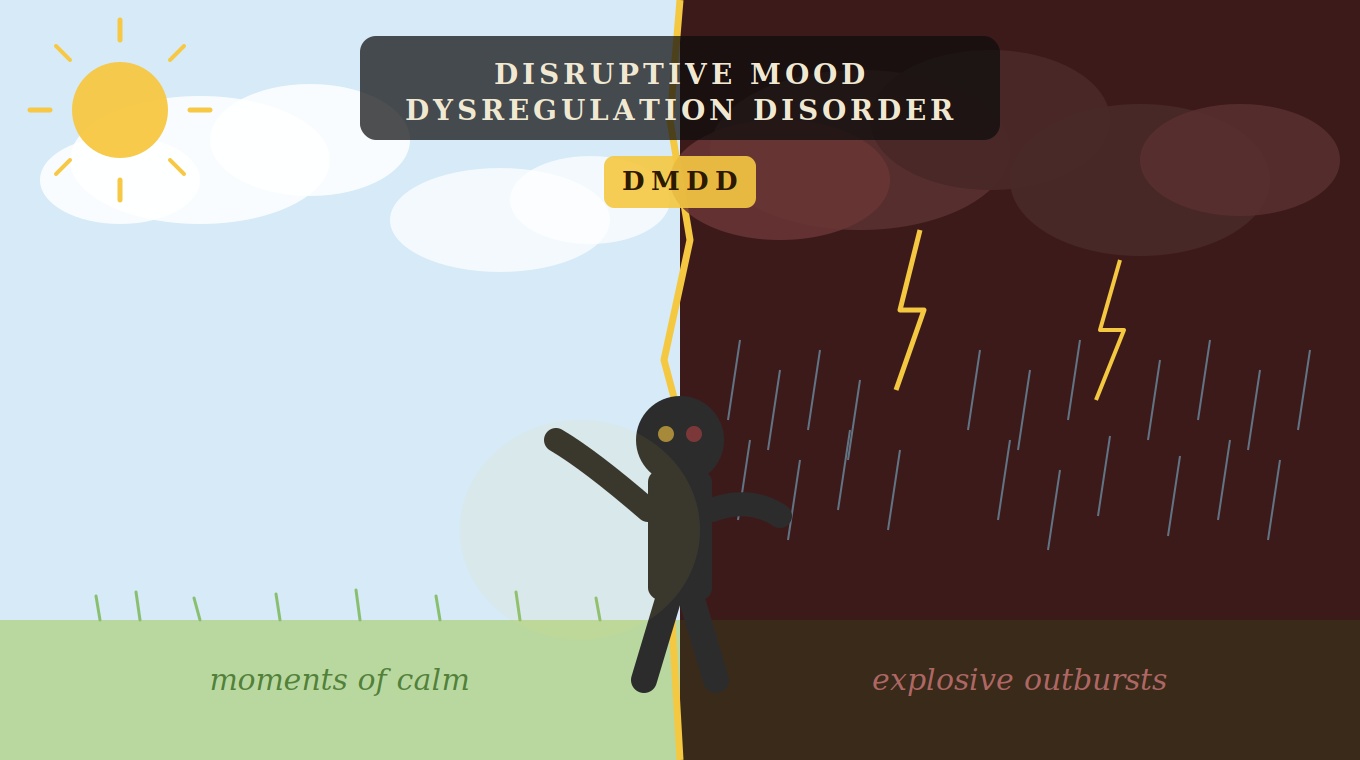
DMDD is classified within the Depressive Disorders chapter of the DSM-5-TR, positioned before major depressive disorder (MDD). This placement reflects the diagnostic priority it holds in the differential for severely irritable youth. The disorder is defined by two core, co-occurring features: (1) severe, recurrent temper outbursts that are grossly disproportionate to the provocation, and (2) a persistently irritable or angry mood that is present between outbursts and observable across multiple settings and informants.
Unlike the episodic nature of bipolar disorder, DMDD presents chronically and continuously. The child does not return to a euthymic baseline between outbursts. Longitudinal research demonstrates that children with DMDD are at significantly elevated risk for developing MDD and generalized anxiety disorder in adulthood, rather than bipolar disorder, underscoring the critical importance of accurate, early diagnosis (Hatchett, 2022).
Epidemiology of Disruptive Mood Dysregulation Disorder (DMDD)
Distribution of DMDD
Prevalence
Establishing precise prevalence estimates for DMDD remains methodologically challenging due to the absence of a gold-standard diagnostic instrument and the high degree of diagnostic overlap with other childhood-onset disorders. Community-based prevalence estimates range from 0.8% to 3.3%, with notable variability attributable to differences in sampling methodology, informant sources, and whether all DSM-5 diagnostic criteria are applied with full rigor (APA, 2022).
A systematic review of 110 studies found that clinical population prevalence rates were substantially higher, estimated at 21.9% (95% CI: 15.5 to 29.0), reflecting referral bias and the overlap of DMDD with other psychiatric comorbidities (Murner-Lavanchy et al., 2023). In community-based samples applying all diagnostic criteria, prevalence narrowed to approximately 0.82% (95% CI: 0.11 to 2.13), suggesting that DMDD in its pure diagnostic form is relatively uncommon but clinically significant when present.
Patterns: Sex, Age, Location, and Season
DMDD is diagnosed more frequently in males than females, with a sex ratio of approximately 2:1 to 3:1 in clinical samples, mirroring the male predominance observed in other disruptive behavior disorders of childhood (APA, 2022). The diagnosis is restricted to children and adolescents aged 6 to 18 years, with onset of symptoms typically occurring before age 10. DMDD cannot be diagnosed for the first time after age 18. Symptom severity tends to be greatest in middle childhood and often diminishes in frequency during adolescence, though functional impairment may persist.
There are no established geographic or seasonal patterns specific to DMDD. However, environmental and contextual factors, including school stressors, peer dynamics, and family conflict are recognized as potent triggers for temper outbursts, meaning symptom expression may fluctuate in relation to external pressures. Urban environments with high psychosocial stress and limited access to mental health services may increase diagnostic latency (Hendrickson et al., 2020).
Determinants
Etiology
The etiology of DMDD is multifactorial and not yet fully elucidated, given the relative novelty of the diagnosis. Current evidence implicates biological, psychological, and social domains in the development and maintenance of the disorder.
Biological Factors
Neuroimaging studies of pediatric severe mood dysregulation (SMD), the research precursor to DMDD, have identified abnormalities in amygdala activation during emotion processing of neutral and emotional facial stimuli. Children with DMDD and SMD demonstrate hyperactivation of the amygdala in response to frustration and ambiguous emotional cues, consistent with a deficit in emotional regulation at the neural level. Dysregulation of the serotonergic and dopaminergic systems has been proposed, reflecting the frequent co-occurrence of DMDD with ADHD and depressive disorders that share these neurobiological substrates (APA, 2022).
Psychological Factors
A core psychological feature of DMDD is an interpretation bias toward hostile intent in ambiguous social situations. Children with DMDD are more likely to interpret neutral or ambiguous social cues as threatening or deliberately provocative. This hostile attribution bias amplifies frustration responses and drives disproportionate temper outbursts. Deficits in frustration tolerance, impulse control, and emotion regulation are central psychological mechanisms sustaining the disorder (Zhang et al., 2024).
Social Factors
Adverse family environments, including harsh and inconsistent parenting, exposure to parental psychopathology, family conflict, and socioeconomic adversity, are among the most robust risk factors for DMDD. Disrupted parent-child attachment, coercive family interaction cycles, and chronic exposure to interpersonal stressors collectively potentiate the development and maintenance of severe irritability and temper dysregulation (Hatchett, 2022).
Risk Factors
- Male sex and age 6 to 10 years at symptom onset.
- Family history of mood disorders, anxiety disorders, or disruptive behavior disorders.
- Adverse childhood experiences, including harsh or inconsistent parenting and family conflict.
- Comorbid ADHD, which is present in a majority of DMDD cases and is a primary driver of treatment complexity.
- Comorbid anxiety disorders, which can amplify irritability when contextually provoked.
- Cognitive deficits in emotion recognition and frustration tolerance.
- Low socioeconomic status and limited access to early mental health intervention (APA, 2022; Murner-Lavanchy et al., 2023).
Effects on Population
Individuals
DMDD imposes a profound burden on the individual child or adolescent. Persistent irritability and unpredictable temper outbursts severely disrupt academic performance, peer relationships, and participation in extracurricular activities. Children with DMDD frequently face school disciplinary action, exclusion from social groups, and peer rejection, all of which compound baseline functional impairment and increase the risk of secondary MDD and anxiety disorders.
Longitudinal evidence consistently demonstrates that children with severe, non-episodic irritability meeting DMDD criteria are at significantly elevated risk for depression and anxiety disorders in adulthood, rather than bipolar disorder. This finding has important implications for long-term prognosis and the focus of preventive interventions (Hendrickson et al., 2020; Walter et al., 2023).
Family
The family unit bears an extraordinary burden when a child presents with DMDD. Recurrent, severe temper outbursts occurring three or more times per week across home and school settings disrupt household routines, undermine parental authority, and create a climate of chronic tension and anticipatory anxiety within the family. Siblings may be adversely affected through exposure to outbursts and the disproportionate allocation of parental attention toward the affected child. Caregiver burden is high, and parents frequently report elevated levels of stress, depression, and marital strain.
Parent management training (PMT) is recognized as a cornerstone of DMDD intervention, in part because of the essential role of parental behavioral consistency in reducing the coercive cycles that maintain the disorder (Hatchett, 2022).
Community
At the community level, DMDD contributes meaningfully to the burden on schools, emergency departments, juvenile justice systems, and outpatient mental health services. Children with DMDD disproportionately receive school suspensions, require behavioral support plans, and utilize crisis services due to the severity and frequency of outbursts. The economic costs are compounded by high rates of comorbidity — particularly ADHD and anxiety — that necessitate multimodal, often long-term interventions.
Community mental health literacy regarding DMDD remains limited, frequently leading to misidentification of children as simply ‘defiant’ or ‘difficult,’ rather than recognizing the treatable neuropsychiatric disorder underlying their behavior (Hendrickson et al., 2020).
Assessment of Disruptive Mood Dysregulation Disorder (DMDD)
DMDD requires a comprehensive, multi-informant, multimodal assessment that gathers information from the child, parents or caregivers, teachers, and other relevant adults. The assessment process must explicitly evaluate the frequency, severity, duration, developmental appropriateness, and cross-setting nature of temper outbursts, as well as the persistence of inter-episode irritability. A key principle of DMDD assessment is that diagnosis cannot be made from child self-report alone — behavioral observation and caregiver and teacher corroboration are essential (Murner-Lavanchy et al., 2023).
Symptom Severity Assessment Tools
Preclinical: Kiddie Schedule for Affective Disorders and Schizophrenia (K-SADS-PL) DMDD Module and Screening Questionnaires
In preclinical and primary care contexts, structured screening is essential to identify children at risk for DMDD before specialist assessment. The K-SADS-PL DMDD module is the most frequently used diagnostic instrument for DMDD in research settings, employing clinician-administered semi-structured interview techniques to operationalize DSM-5 criteria. Murner-Lavanchy et al. (2023) report that the K-SADS-PL DMDD module was used in approximately 25% of published DMDD studies, with interrater reliability scores ranging from kappa = 0.6 to 1.0, supporting its adequacy as a diagnostic reference standard.
For practical preclinical screening, Boudjerida et al. (2022) developed and validated the Disruptive Mood Dysregulation Disorder Questionnaire (DMDD-Q), a brief questionnaire administered during a semi-structured interview with adolescents aged 12 to 15 years in clinical settings. The DMDD-Q demonstrated strong psychometric properties and fills a critical gap in the absence of a widely validated brief screening tool for DMDD. In primary care settings, the Strengths and Difficulties Questionnaire (SDQ) and the Pediatric Symptom Checklist (PSC) may serve as first-stage screening tools for behavioral and emotional dysregulation, with follow-up specialist assessment for positive screens.
The PHQ-A (Patient Health Questionnaire – Adolescent Version) is recommended as an initial depression screener in adolescents and may help identify comorbid depressive symptoms. Walter et al. (2023) recommend the PHQ-9 for initial depression screening in the context of mood disorders in children and adolescents, with escalation to a structured diagnostic interview for positive screens.
Clinical: Mental Status Examination (MSE) of Disruptive Mood Dysregulation Disorder (DMDD)
The Mental Status Examination is an indispensable component of the clinical evaluation of a child or adolescent with suspected DMDD. It must be conducted with age-appropriate adaptations and complemented by caregiver and teacher report. Key MSE domains in the context of DMDD include the following.
Appearance: The child may appear disheveled, restless, or physically tense. Facial expression frequently reflects baseline irritability or sullenness, even outside of outburst episodes. Psychomotor agitation may be present, particularly in children with comorbid ADHD.
Behavior: Observable irritability during the clinical encounter is a significant diagnostic cue. The child may be oppositional, minimally cooperative, or demonstrate low frustration tolerance in response to interview questions or structured tasks. Eye contact may be avoidant or confrontational.
Speech: Speech may be pressured or explosive during frustration, with rate and tone fluctuating considerably. Unlike mania, there is no flight of ideas or grandiosity.
Mood: Subjectively described as ‘angry,’ ‘frustrated,’ ‘bored,’ or ‘mad.’ The child is unlikely to spontaneously volunteer mood state; direct, developmentally appropriate questioning is required. Parents and teachers consistently report a baseline of chronic irritability, distinct from any acute outburst.
Affect: Irritable, dysphoric, or labile. The affective baseline between outbursts is the key distinguishing feature of DMDD: affect is persistently negative, not euthymic. Reactive affect may be briefly elicited but quickly returns to the irritable baseline.
Thought Process: Organized. Unlike psychotic or manic presentations, thought content is coherent and goal-directed, though it may be preoccupied with themes of perceived injustice, frustration, or interpersonal conflict.
Thought Content: Clinicians must carefully assess for passive and active suicidal ideation. Children with DMDD carry elevated risk for suicidal ideation, particularly in the context of comorbid MDD or following a severe outburst. Themes of hopelessness, worthlessness, or self-blame following outbursts should be elicited. Homicidal ideation or threats of harm to others must also be assessed in the context of severe outbursts.
Cognition: Age-appropriate cognitive functioning is expected in uncomplicated DMDD; however, co-occurring ADHD frequently contributes to deficits in attention, working memory, and executive function. A brief cognitive screen may be warranted if academic impairment is reported.
Insight and Judgment: Typically limited in younger children, who often attribute outbursts to external provocations rather than internal dysregulation. Adolescents may demonstrate greater insight but may minimize the frequency or severity of outbursts. Parental collateral is essential to calibrate self-reported insight (APA, 2022).
Post-Clinical: Repeat Behavioral Rating Scales
Following the initial clinical assessment and initiation of treatment, serial administration of validated behavioral rating scales is recommended to monitor symptom trajectory and treatment response. The following instruments are recommended.
Affective Reactivity Index (ARI): A brief, validated 6-item self-report and parent-report scale specifically designed to measure irritability in children and adolescents. The ARI has demonstrated strong psychometric properties across clinical and community samples and directly targets the core feature of DMDD — persistent irritability — making it the most clinically specific monitoring tool currently available (Murner-Lavanchy et al., 2023).
Child Behavior Checklist (CBCL): A comprehensive broadband behavioral rating scale providing standardized T-scores across externalizing, internalizing, and attention problem domains. Repeated CBCL administration captures treatment-related changes across multiple symptom domains and is particularly useful in children with comorbid ADHD and anxiety.
Clinical Global Impressions — Severity and Improvement Scales (CGI-S/CGI-I): Clinician-rated global severity and improvement scores are essential components of treatment monitoring in DMDD, providing a standardized clinician perspective to complement self- and caregiver-report instruments.
PHQ-A: Continued PHQ-A monitoring at four- to eight-week intervals is recommended to detect the emergence or progression of comorbid depressive symptoms, which substantially alter the treatment plan (Walter et al., 2023).
Diagnosis of Disruptive Mood Dysregulation Disorder (DMDD)
Diagnosis of DMDD is made through careful clinical interview conforming to DSM-5-TR criteria, drawing on multi-informant data from the child, parents, and teachers. Because no single instrument has been established as a gold standard, diagnosis remains a clinical determination integrating history, behavioral observation, and structured assessment. The age restrictions, duration requirements, and cross-setting criteria must all be explicitly documented (APA, 2022).
DSM-5-TR Diagnostic Criteria for Disruptive Mood Dysregulation Disorder (296.99 / F34.81)
Criterion A
Severe recurrent temper outbursts manifested verbally, for example, verbal rages, and/or behaviorally, for example, physical aggression toward people or property, that are grossly out of proportion in intensity or duration to the situation or provocation.
Criterion B
The temper outbursts are inconsistent with the child’s developmental level.
Criterion C
The temper outbursts occur, on average, three or more times per week.
Criterion D
The mood between temper outbursts is persistently irritable or angry most of the day, nearly every day, and is observable by others such as parents, teachers, and peers.
Criterion E
Criteria A through D have been present for 12 or more months. Throughout that time, the individual has not had a period lasting three or more consecutive months without all of the symptoms in Criteria A through D.
Criterion F
Criteria A and D are present in at least two of three settings — at home, at school, or with peers — and are severe in at least one of these settings.
Criterion G
The diagnosis should not be made for the first time before age 6 or after age 18 years.
Criterion H
By history or observation, the age at onset of Criteria A through E is before 10 years.
Criterion I
There has never been a distinct period lasting more than one day during which the full symptom criteria, except duration, for a manic or hypomanic episode have been met. Note: Developmentally appropriate mood elevation, such as occurs in the context of a highly positive event or its anticipation, should not be considered a symptom of mania or hypomania.
Criterion J
The behaviors do not occur exclusively during an episode of major depressive disorder and are not better explained by another mental disorder such as autism spectrum disorder, PTSD, separation anxiety disorder, persistent depressive disorder, or a substance use disorder. Note: This diagnosis cannot coexist with oppositional defiant disorder, intermittent explosive disorder, or bipolar disorder, though it can coexist with ADHD, MDD, and anxiety disorders. If the child meets criteria for both DMDD and ODD, only DMDD is diagnosed (APA, 2022).
Criterion K
The symptoms are not attributable to the physiological effects of a substance or another medical or neurological condition (APA, 2022).
Differential Diagnosis
The differential diagnosis of DMDD requires careful longitudinal assessment to distinguish it from conditions with overlapping presentations. Hatchett (2022) identifies differential diagnosis as one of the most challenging clinical tasks in child psychiatry, given the phenotypic overlap between DMDD and several other disorders.
Pediatric Bipolar Disorder (PBD)
The distinction between DMDD and pediatric bipolar disorder is the most critical diagnostic differentiation. In bipolar disorder, irritability and elevated mood are episodic; the child returns to a euthymic or normal baseline between episodes. In DMDD, irritability is chronic, non-episodic, and constitutes the pervasive inter-episode baseline mood. The presence of a manic or hypomanic episode — even a single episode lasting more than one day with full symptom criteria other than duration — definitively excludes a diagnosis of DMDD. DMDD was explicitly introduced in the DSM-5 to address the clinical problem of bipolar disorder overdiagnosis in chronically irritable youth (APA, 2022).
Oppositional Defiant Disorder (ODD)
DMDD shares significant symptom overlap with ODD, and robust evidence demonstrates high comorbidity and co-occurrence between the two diagnoses. However, by DSM-5-TR rule, DMDD supersedes ODD: if a child meets criteria for both DMDD and ODD, only DMDD is diagnosed. The critical differentiating features are the severity and cross-setting nature of the irritability and outbursts in DMDD, as well as the persistence of inter-episode irritable mood. ODD can be diagnosed alongside DMDD only when the child’s oppositional behaviors extend beyond the core DMDD presentation (APA, 2022; Hatchett, 2022).
Attention-Deficit/Hyperactivity Disorder (ADHD)
ADHD is the most common comorbid condition in DMDD, present in the majority of affected children, and both diagnoses can be made simultaneously. The distinguishing feature is that ADHD does not involve the persistent inter-episode irritability or the disproportionate severity of temper outbursts characteristic of DMDD. When both diagnoses are present, treatment planning must address both the attentional and hyperactivity dimension and the emotion dysregulation dimension independently, as pharmacotherapy for ADHD alone does not fully address DMDD symptoms (Breaux et al., 2022).
Autism Spectrum Disorder (ASD)
Children with ASD frequently exhibit temper outbursts in response to disruptions in routine or sensory overload. In such cases, the outbursts are considered secondary to the ASD, and DMDD should not be additionally diagnosed. A diagnosis of DMDD in the context of ASD is only appropriate when the temper outbursts are clearly disproportionate to, and not fully accounted for by, the ASD presentation (APA, 2022).
Disruptive Mood Dysregulation Disorder (DMDD) Treatment
Treatment Goals
DMDD goals of treatment are established collaboratively with the child, parents, and relevant school and community stakeholders. Evidence-based goals include the following.
- Reduce the frequency, severity, and duration of temper outbursts to below the diagnostic threshold across all settings.
- Reduce the chronic baseline irritability observed between outbursts, as measured by validated rating scales such as the ARI and CBCL.
- Improve frustration tolerance and emotion regulation skills through targeted psychosocial interventions.
- Restore and optimize academic, social, and family functioning.
- Identify and treat comorbid conditions, particularly ADHD and anxiety disorders, that independently contribute to outburst frequency and severity.
- Build parental competency in consistent, evidence-based behavioral management strategies through parent management training.
- Reduce suicidal ideation risk through ongoing assessment and safety planning comorbid to MDD (Hatchett, 2022; Zhang et al., 2024).
Implementation of the Treatment Plan
Psychopharmacology Treatment of Disruptive Mood Dysregulation Disorder (DMDD)
A critical clinical reality of DMDD pharmacotherapy is that no medication has received FDA approval specifically for DMDD. All pharmacological treatment is off-label and is directed at either the primary symptoms of DMDD, severe irritability and temper outbursts, or its comorbid conditions, most commonly ADHD. The evidence base remains limited, consisting primarily of open-label trials, small randomized controlled trials, and extrapolation from the broader literature on disruptive behavior disorders and severe mood dysregulation (Hendrickson et al., 2020; Zhang et al., 2024). Pharmacotherapy should never be initiated as a standalone intervention but always in combination with psychosocial treatment and parent management training.
First-Line Pharmacotherapy
Given the high prevalence of comorbid ADHD in DMDD, clinical consensus and current evidence support treating ADHD first as the initial pharmacological step. Resolution of ADHD symptoms, inattention, impulsivity, and hyperactivity, frequently produces secondary improvements in irritability and outburst frequency.
- CNS Stimulants: Methylphenidate (MPH; dose range 0.71 to 1.03 mg/kg/day) and amphetamine-based stimulants are the primary first-line agents in DMDD with comorbid ADHD. Breaux et al. (2022) reviewed evidence from open-label trials demonstrating statistically significant reductions in parent-reported irritability (effect size d = 0.57 to 0.58) with MPH in children with comorbid ADHD and DMDD. Dang et al. (2024), in a network meta-analysis of 55 RCTs, confirmed that stimulants are significantly more efficacious than placebo for disruptive behaviors in youth.
- Alpha-2 Agonists: Guanfacine extended-release (1 to 4 mg/day) and clonidine are reasonable first-line adjuncts, particularly in children with ADHD and prominent irritability or aggression. They are especially useful when stimulants are contraindicated or poorly tolerated, or when irritability persists despite adequate ADHD treatment.
- SSRIs: When DMDD presents without clinically significant ADHD, SSRIs may be considered as first-line agents targeting depressive and anxiety components. Fluoxetine and sertraline have been used in clinical practice; citalopram as an adjunct to methylphenidate has demonstrated some benefit for irritability in ADHD-DMDD comorbidity (Breaux et al., 2022).
Second-Line Pharmacotherapy
If first-line ADHD pharmacotherapy fails to adequately control irritability and outburst severity, or when ADHD is not the primary driver, second-line strategies are considered.
- Second-Generation Antipsychotics (SGAs): Aripiprazole and risperidone are the most frequently used SGAs in clinical practice for DMDD. Dang et al. (2024) found that SGAs were the most efficacious pharmacological class for reducing disruptive behaviors in youth across the network meta-analysis, outperforming stimulants and non-stimulant ADHD agents in this specific outcome. Aripiprazole combined with methylphenidate has demonstrated benefit in open-label trials for ADHD-DMDD comorbidity (Breaux et al., 2022). Metabolic monitoring including, weight, BMI, fasting glucose, and lipid profile, is mandatory with SGA use in children.
- Mood Stabilizers: Divalproex sodium (valproate) and lithium have shown benefit in small studies of severe mood dysregulation and explosive temper outbursts. They are considered in cases where outburst severity is extreme, where there is a strong family history of bipolar spectrum disorders, or where SGAs are not tolerated. Serum level monitoring is required.
- Atomoxetine: A non-stimulant ADHD agent with some evidence for irritability reduction in ADHD comorbidity. Particularly useful when stimulant intolerance or substance misuse risk limits first-line options.
Third-Line Pharmacotherapy
Third-line pharmacotherapy is reserved for refractory DMDD and should be managed in consultation with a specialist in child and adolescent psychiatry.
- Amantadine: Case reports document symptomatic improvement in severe DMDD. It has been used in cases refractory to stimulants, SGAs, and mood stabilizers. Its mechanism of NMDA receptor antagonism provides a mechanistically distinct option (Hendrickson et al., 2020).
- Combination pharmacotherapy: More complex multi-agent regimens combining stimulants with SGAs, mood stabilizers, or alpha agonists may be necessary in treatment-resistant cases with high outburst severity and significant comorbidity burden.
- Ongoing medication review: Given the developmental trajectory of DMDD and its tendency to evolve into depressive or anxiety disorders in adolescence and adulthood, pharmacotherapy should be regularly reviewed with consideration of de-escalation as the child matures and psychosocial skills consolidate (Hendrickson et al., 2020; Zhang et al., 2024).
Psychotherapy
Psychosocial interventions are the recommended first-line treatment for DMDD, with pharmacotherapy reserved for comorbid conditions or when psychosocial treatment alone is insufficient. Expert consensus and clinical guidelines consistently recommend initiating treatment with CBT combined with parent management training (PMT) before pharmacotherapy, particularly in the absence of severe ADHD comorbidity (Hatchett, 2022; Hendrickson et al., 2020).
Individual Therapy
Cognitive Behavioral Therapy (CBT) for Anger and Aggression: CBT adapted for DMDD directly targets the cognitive-behavioral mechanisms sustaining the disorder: hostile attribution bias, frustration intolerance, and behavioral impulsivity. Core components include anger cue identification, relaxation training (progressive muscle relaxation and diaphragmatic breathing), problem-solving skills training, social skills development, and behavioral coping strategies for frustration. The most structured CBT program for DMDD is Sukhodolsky and Scahill’s Anger Control Training, which has been applied to DMDD-profile children with case study evidence of efficacy (Hatchett, 2022). Zhang et al. (2024), in their meta-analysis, confirmed statistically significant improvements in irritability symptoms with nonpharmacological interventions across 11 included studies.
Interpretation Bias Training (IBT): IBT is a computerized cognitive training intervention that directly targets hostile attribution bias, one of the core cognitive vulnerabilities in DMDD, by systematically training the child to interpret ambiguous facial expressions and social scenarios as benign rather than threatening. A randomized controlled trial of computerized IBT for DMDD demonstrated improvements in irritability and emotional reactivity, making it a promising adjunct to traditional CBT (Haller et al., 2022, as cited in Zhang et al., 2024).
Dialectical Behavior Therapy — Adolescent (DBT-A): DBT adapted for adolescents with emotion dysregulation addresses the same core deficit in DMDD, the inability to tolerate frustrating emotions without behavioral escalation. DBT-A skills modules relevant to DMDD include distress tolerance, emotion regulation, and interpersonal effectiveness. While the evidence base specifically for DMDD is still emerging, DBT-A is included in current treatment recommendations for adolescents with DMDD-profile presentations (Hendrickson et al., 2020).
Group Therapy
Parent Management Training (PMT): PMT is arguably the single most evidence-based intervention for childhood disruptive behavior disorders and is a central component of all DMDD treatment protocols. PMT systematically trains parents in consistent application of positive reinforcement for appropriate behavior, planned ignoring of minor misbehavior, effective use of time-out and response cost procedures, and de-escalation strategies during outburst escalation cycles. PMT reduces the coercive parent-child interaction cycles that perpetuate and reinforce outbursts. Walter et al. (2023) emphasize the critical importance of family engagement and parental skill-building in the treatment of childhood mood and disruptive disorders.
Child and Parent Combined Group Therapy: Group-based interventions involving simultaneous child skills groups and parent training groups maximize the generalization of emotion regulation and coping skills across home, school, and peer contexts. This format has been studied in severe mood dysregulation populations with promising feasibility and effectiveness data (Hatchett, 2022).
School-Based Behavioral Intervention Groups: Coordinating with school counselors and psychologists to implement school-based social-emotional learning (SEL) curricula, behavioral support plans, and functional behavioral assessments (FBAs) is essential. Children with DMDD require individualized behavioral support across all settings, not only in clinical contexts.
Complementary Care
Nursing
Nurses are at the frontline of DMDD identification, education, and monitoring. Key nursing responsibilities include the following areas of practice.
- Conducting systematic behavioral screening using the SDQ, PSC, or DMDD-specific tools at primary care well-child visits to identify at-risk children before specialist referral.
- Administering and interpreting the ARI and PHQ-A at each clinical encounter to monitor treatment response and detect emerging comorbid depression.
- Assessing suicidal ideation at every encounter using the Columbia Suicide Severity Rating Scale (C-SSRS), adapted for the child’s developmental level.
- Providing structured psychoeducation to parents about DMDD, including the neurobiological basis of irritability, realistic treatment expectations, and the critical importance of consistency in behavioral management at home.
- Monitoring pharmacotherapy side effects, adherence, and metabolic parameters such as weight, BMI, and blood pressure, particularly when SGAs are prescribed.
- Coordinating care across the child’s school, therapy provider, prescriber, and family to ensure consistency of the behavioral management plan across settings (Walter et al., 2023).
Nutrition
While nutrition-specific studies for DMDD are limited, general evidence supports several dietary principles for mood and behavior regulation in children with DMDD.
- Elimination of excessive sugar and ultra-processed foods, which contribute to dysglycemia and mood lability, a practical behavioral target in families of children with DMDD.
- Omega-3 fatty acid supplementation (EPA/DHA) has demonstrated modest reductions in aggression and irritability in pediatric populations in several RCTs, making it a low-risk dietary adjunct.
- Regular meal timing and avoidance of prolonged fasting, as hypoglycemia can lower frustration thresholds and precipitate outbursts in children with poor glycemic regulation.
- Adequate micronutrient intake, including iron, zinc, and magnesium, is associated with improved attention and behavioral regulation in children with and without ADHD comorbidity.
- Nutritional counseling as part of metabolic monitoring is particularly important when SGAs are prescribed, given their well-documented risks of weight gain and metabolic dysregulation in children (Dang et al., 2024).
Physiotherapy
Physical activity serves as a critical behavioral and neurobiological intervention for children with DMDD, with evidence supporting the following approaches.
- Regular aerobic exercise: 30 to 60 minutes of moderate-to-vigorous activity daily — is associated with improved executive function, reduced impulsivity, and lower emotional reactivity in children with ADHD and disruptive behavior disorders.
- Structured physical activity provides a socially acceptable outlet for physical energy, reducing the likelihood of physical aggression during frustration states.
- Mind-body interventions: yoga, martial arts, and tai chi, build self-regulation and frustration tolerance through deliberate practice of controlled breathing and movement, with growing evidence in pediatric behavioral disorders.
- Physiotherapists and school physical educators can collaborate with the clinical team to develop structured, graduated physical activity programs that incorporate emotion regulation principles into the activity itself.
Social Work
Social workers address the social determinants and environmental factors that sustain DMDD and complicate treatment engagement. Core functions include the following.
- Conducting comprehensive family psychosocial assessments that identify housing instability, domestic violence, parental psychopathology, and financial hardship, all of which reduce the capacity of families to implement consistent behavioral management at home.
- Coordinating with school counselors, child protective services, and legal or juvenile justice systems as warranted. Children with DMDD are at elevated risk for contact with the juvenile justice system due to physical aggression (Hatchett, 2022).
- Facilitating access to community mental health services, parent support groups, and early intervention programs.
- Providing individual and family counseling to address caregiver stress, marital strain, and sibling dynamics disrupted by the child’s DMDD.
- Conducting safety assessments and developing family safety plans for households experiencing severe outbursts involving physical aggression or property destruction.
Occupational Therapy
Occupational therapists contribute uniquely to DMDD management, particularly in children with sensory processing difficulties or significant functional impairment. Core contributions include the following.
- Assessing sensory processing patterns that may function as triggers for outbursts — including auditory hypersensitivity, tactile defensiveness, or sensory overload in crowded or chaotic environments.
- Implementing sensory diet strategies and environmental modifications that reduce sensory overload and de-escalation triggers across home and school settings.
- Building structured, predictable daily routines that reduce the uncertainty and transitional stressors that frequently precipitate outbursts in children with DMDD.
- Supporting the development of adaptive coping and self-regulation skills through occupation-based activity, including structured play, creative arts, and collaborative building tasks that require frustration tolerance.
- Coordinating with school occupational therapists to implement sensory and behavioral accommodations within the Individualized Education Plan (IEP) or Section 504 framework (Hendrickson et al., 2020).
Evaluation of Disruptive Mood Dysregulation Disorder (DMDD) Treatment
Prognosis
The prognosis of DMDD is guarded without intervention but substantially improved with early, comprehensive, multimodal treatment. The critical prognostic finding from longitudinal research is that children with severe, non-episodic irritability meeting DMDD criteria do not typically develop bipolar disorder in adulthood. Rather, they are at significantly elevated risk for MDD and generalized anxiety disorder — a finding that was central to the rationale for introducing DMDD as a distinct diagnostic category in the DSM-5 (APA, 2022; Hendrickson et al., 2020).
Several factors are associated with poorer prognosis: early age of onset, high outburst severity and frequency at diagnosis, significant comorbidity burden (particularly comorbid MDD and anxiety), inadequate social support, and limited parental capacity to implement consistent behavioral management. Zhang et al. (2024), in their meta-analysis of DMDD treatment studies, reported statistically significant improvements in irritability with both pharmacological and nonpharmacological interventions, despite high heterogeneity across studies — supporting the effectiveness of treatment while underscoring the need for individualized, multimodal approaches. Suicide risk must be monitored continuously throughout the course of treatment and beyond, given the trajectory toward depressive disorders in adolescence and adulthood.
Follow-Up
Structured follow-up is essential in DMDD given the chronic, fluctuating nature of symptoms and the high comorbidity burden. A recommended follow-up protocol includes the following phases.
- Acute treatment phase (first three months): Every two to four weeks. Administer the ARI, PHQ-A, and CGI-I; review medication tolerability and side effects; assess PMT engagement and consistency at home and school.
- Stabilization phase (months four through twelve): Monthly visits. Continue ARI and PHQ-A monitoring; review school behavioral data and teacher reports; adjust treatment plan as indicated.
- Maintenance phase (beyond twelve months): Every two to three months. Continue behavioral monitoring; reassess diagnosis and comorbidities, particularly for emerging MDD or anxiety disorders; consider treatment de-escalation or step-down as symptom remission is sustained.
- Suicidal risk assessment using the C-SSRS at every clinical encounter.
- Metabolic monitoring every three to six months for children receiving SGAs: weight, BMI, blood pressure, fasting glucose, and lipid profile (Dang et al., 2024; Walter et al., 2023).
Referral
Referral to child and adolescent psychiatric specialist services is indicated in the following circumstances.
- Diagnostic uncertainty: particularly when bipolar disorder, ASD, or a complex comorbidity profile cannot be confidently excluded in the primary care or general pediatric setting.
- Non-response to two adequate trials of psychosocial intervention and first-line pharmacotherapy for comorbid ADHD.
- High-frequency, high-severity outbursts involving physical aggression, property destruction, or threats of harm — particularly when safety of the child or others is at risk.
- Emergence of suicidal ideation, self-harm, or active suicidal behavior requiring specialist risk assessment and potential hospitalization.
- Complex comorbidity: concurrent ADHD, MDD, anxiety disorder, ASD, or intellectual disability requiring integrated specialist management.
- Need for advanced behavioral consultation, functional behavioral assessment, or specialized school-based intervention programming (Hatchett, 2022; Hendrickson et al., 2020).
Red Flags
The following presentations require immediate assessment and action. They should not be deferred to scheduled follow-up appointments.
- Active suicidal ideation with plan, intent, or means: administer the C-SSRS immediately, activate safety plan, and consider emergency psychiatric evaluation or inpatient hospitalization.
- Homicidal ideation or explicit threats of physical harm to others: requires mandatory safety assessment, parental notification, and coordination with school and community safety stakeholders.
- Physical violence resulting in injury to self, others, or significant property damage, may necessitate emergency services involvement and inpatient psychiatric evaluation.
- Emergence of manic or hypomanic symptoms, including elevated mood, grandiosity, decreased need for sleep, or markedly increased goal-directed activity, which would necessitate urgent diagnostic reassessment to rule out bipolar disorder and potentially alter the entire treatment trajectory.
- Severe medication side effects: extrapyramidal symptoms with SGAs (dystonia, akathisia, tardive dyskinesia), serotonin syndrome with SSRIs, or signs of lithium toxicity, all require immediate medical evaluation.
- Acute psychosis, such as disorganized behavior, hallucinations, or delusional content, requires urgent psychiatric assessment and diagnosis revision (APA, 2022; Hendrickson et al., 2020).
Resources
- American Academy of Child and Adolescent Psychiatry (AACAP) clinical practice guidelines, family resources, and Find a Psychiatrist tool.
- 988 Suicide and Crisis Lifeline: Call or text 988 for 24/7 crisis support.
- Crisis Text Line: Text HOME to 741741.
- National Alliance on Mental Illness (NAMI): NAMI Helpline 1-800-950-NAMI, family support groups, and NAMI Family-to-Family program.
- Child Mind Institute: evidence-based resources on DMDD, disruptive behavior, and emotion dysregulation for families and educators.
- Centers for Disease Control and Prevention — Children’s Mental Health: free parent and educator guides on childhood behavioral disorders.
- American Psychiatric Association — DSM-5-TR Resources
References
American Psychiatric Association. (2022). Diagnostic and statistical manual of mental disorders (5th ed., text revision). https://doi.org/10.1176/appi.books.9780890425787
Boudjerida, A., Labelle, R., Bergeron, L., Berthiaume, C., Guilé, J.-M., & Breton, J.-J. (2022). Development and initial validation of the Disruptive Mood Dysregulation Disorder Questionnaire among adolescents from clinic settings. Frontiers in Psychiatry, 13, 617991. https://doi.org/10.3389/fpsyt.2022.617991
Breaux, R. P., Dunn, N. E., Swanson, C. S., Larkin, M., Waxmonsky, J. G., & Baweja, R. (2022). A mini-review of pharmacological and psychosocial interventions for reducing irritability among youth with ADHD. Frontiers in Psychiatry, 13, 794044. https://doi.org/10.3389/fpsyt.2022.794044
Dang, J., Zhong, G., Ye, J., Wang, X., & Ke, J. (2024). Psychopharmacological treatment of disruptive behavior in youths: Systematic review and network meta-analysis. Scientific Reports, 14, 702. https://doi.org/10.1038/s41598-023-33979-2
Hatchett, G. T. (2022). Treatment planning strategies for youth with Disruptive Mood Dysregulation Disorder. The Professional Counselor, 12(1), 36–48. https://doi.org/10.15241/gth.12.1.36
Hendrickson, B., Girma, M., & Miller, L. (2020). Review of the clinical approach to the treatment of Disruptive Mood Dysregulation Disorder. International Review of Psychiatry, 32(3), 202–211. https://doi.org/10.1080/09540261.2020.1757635
Mürner-Lavanchy, I., Kaess, M., & Koenig, J. (2023). Diagnostic instruments for the assessment of Disruptive Mood Dysregulation Disorder: A systematic review of the literature. European Child & Adolescent Psychiatry, 32(1), 17–39. https://doi.org/10.1007/s00787-021-01840-4
Walter, H. J., Abright, A. R., Bukstein, O. G., Diamond, J., Keable, H., Ripperger-Suhler, J., & Rockhill, C. (2023). Clinical practice guideline for the assessment and treatment of children and adolescents with major and persistent depressive disorders. Journal of the American Academy of Child & Adolescent Psychiatry, 62(5), 479–502. https://doi.org/10.1016/j.jaac.2022.10.001
Zhang, Y., Zhou, H., & Zhong, J. (2024). Systematic review and meta-analysis: Pharmacological and nonpharmacological interventions for Disruptive Mood Dysregulation Disorder. Journal of Child and Adolescent Psychopharmacology. https://doi.org/10.1089/cap.2024.0013