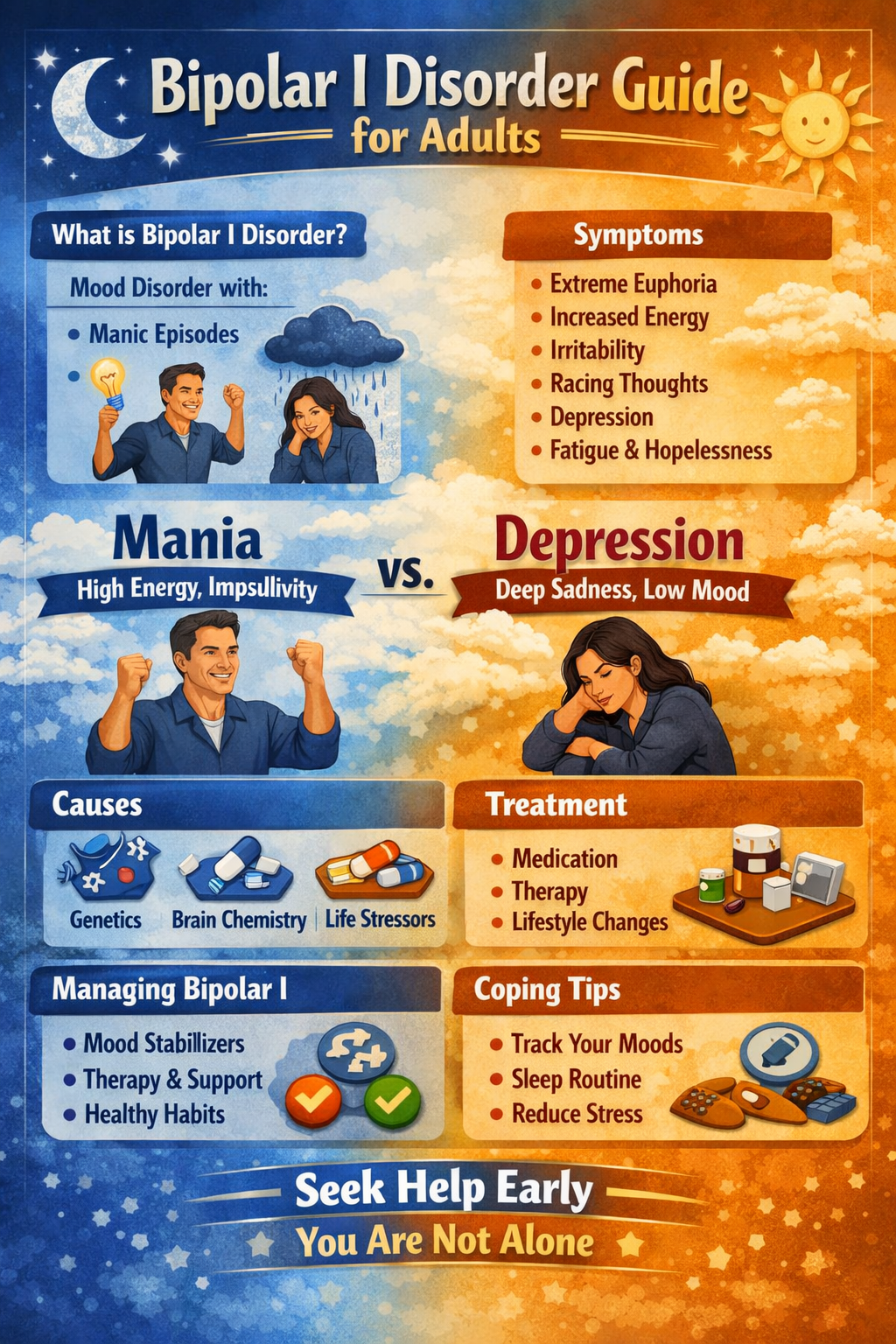
A Comprehensive Clinical Overview
Bipolar I Disorder (BD-I) is among the most severe and consequential mental health conditions in clinical practice. The definition of bipolar I disoder is the presence of at least one lifetime manic episode, it carries profound risks for the individual, their family, and society at large. This comprehensive guide covers everything clinicians, students, and informed readers need to know about BD-I, from its global epidemiology and neurobiological underpinnings to DSM-5-TR diagnostic criteria, evidence-based pharmacotherapy, psychotherapy, interprofessional care, and long-term management. The paper is based on the 2023 CANMAT/ISBD guidelines reccommendations (Keramatian et al., 2023) and clinical dats from major meta-analytic literature in the current peer-reviewed evidence.
What Is Bipolar I Disorder?
Bipolar I Disorder (BD-I) is a severe, chronic, and episodic mood disorder defined by the presence of at least one lifetime manic episode lasting at least one week, causing marked functional impairment or accompanied by psychotic features (American Psychiatric Association [APA], 2022). Depressive and hypomanic episodes frequently co-occur but are not required for the BD-I diagnosis.
BD-I represents the most severe end of the bipolar spectrum and carries substantial morbidity, premature mortality, and socioeconomic burden. It is best understood as a multifactorial condition driven by genetic, neurobiological, and environmental factors, frequently complicated by psychiatric and medical comorbidities (Fico et al., 2025).
How Bipolar I Differs from Other Bipolar Spectrum Disorders
Unlike Bipolar II Disorder, which requires hypomanic (not full manic) episodes alongside depressive episodes, a single qualifying manic episode is sufficient and sufficient alone for a BD-I diagnosis. The most impairing form of bipolar are associated with manic episodes in BD-I associaed with their severity, duration, and functional consequences.
Epidemiology: Prevalence, Patterns, and Global Burden
Bipolar I Disorder is a global public health challenge. Understanding its epidemiology is essential for healthcare planning, early identification, and reducing the years of disability it causes worldwide.
Global and National Prevalence of Bipolar Disorder
According to the 2021 Global Burden of Disease (GBD) Study, an estimated 37 million people (approximately 0.5% of the global population) were living with bipolar disorder in 2021, the majority being working-age adults (World Health Organization [WHO], 2025). This makes it one of the 17 leading causes of disability globally and a major contributor to disability-adjusted life-years (DALYs) (Fico et al., 2025).
Global incidence has been rising, increasing from approximately 30.2 million cases in 1990 to 53.9 million in 2021, with projections indicating continued growth through 2035 (Hu et al., 2025). In the United States, the lifetime prevalence of BD-I and BD-II combined is estimated at 4.4%, with BD-I being most prevalent among young adults aged 18 to 25 years (Nierenberg et al., 2023, as cited in Hu et al., 2025).
Demographic and Seasonal Patterns related to Bipolar I Disorder
Age of Onset
Onset typically occurs in late adolescence to early adulthood, with a median age of approximately 20 years. More than 70% of individuals exhibit clinical features before age 25 (World Mental Health Surveys, as cited in SingleCare, 2024). This early onset means BD-I often disrupts critical developmental milestones including education, career development, and the formation of long-term relationships.
Sex Differences
BD-I affects men and women at roughly equal rates. Worldwide, approximately 48% of people with bipolar disorder are male and 52% are female. However, women are more likely to experience rapid cycling, mixed features, and depression-predominant illness, which have implications for treatment selection (WHO, 2025).
Seasonal Patterns
Seasonal patterns may occur in BD-I, with manic episodes more frequently reported in spring and summer. This seasonal variability likely reflects circadian rhythm influences on mood regulation and underscores the clinical importance of monitoring patients during these periods.
Regional and Socioeconomic Disparities
The burden of disease shows significant regional variation. High-sociodemographic-index (SDI) countries demonstrate elevated absolute incidence and prevalence, while low-SDI regions face progressively significant disease burden coupled with severely limited access to diagnosis and treatment (Hu et al., 2025). Stigma and discrimination remain widespread barriers globally (WHO, 2025).
Etiology and Risk Factors: What Causes Bipolar I Disorder?
BD-I arises from complex gene-environment interactions. No single causative mechanism has been identified. The condition is best understood as a multifactorial disorder with biological, psychological, and social contributors (Fico et al., 2025; Scott & McClung, 2023).
Biological and Neurobiological Factors related to Bipolar I Disorder
Genetic Heritability
Heritability is estimated at 60-80%. The largest genome-wide association study (GWAS) of bipolar disorder to date, comprising over 40,000 cases, identified 64 genomic risk loci, with risk alleles enriched in synaptic signaling pathways and brain-expressed genes, particularly in the prefrontal cortex and hippocampus (Mullins et al., 2021). Recent fine-mapping analyses have identified specific causal risk genes and implicated neurobiological and developmental pathways, underscoring the polygenic and neurodevelopmental nature of BD-I.
Neuroimaging and Brain Structure
Neuroimaging meta-analyses report cortical thickness abnormalities and frontolimbic connectivity disruption in BD. Structural changes in limbic and cortical regions serve as functional biomarkers associated with emotion dysregulation (Scott & McClung, 2023). These findings help explain core clinical features including impaired impulse control, reward hypersensitivity, and emotional dysregulation.
Cellular and Molecular Pathways
Dysregulation of calcium homeostasis, circadian rhythm pathways, mitochondrial function, and neurodevelopmental processes have been implicated through induced pluripotent stem cell (iPSC) research (Scott & McClung, 2023). These molecular insights are paving the way for more targeted pharmacological interventions beyond traditional monoamine-focused treatments.
Psychological Factors
Several psychological mechanisms have been consistently implicated in BD-I vulnerability and episode precipitation:
- Earlier onset and worse clinical prognosis are linked to Childhood trauma, adverse life events, and high expressed emotion in the family environment.
- Reward hypersensitivity and behavioural activation system (BAS) dysregulation are core psychological vulnerability mechanisms in BD-I
- Sleep disturbance and disrupted circadian regulation play a central role in episode precipitation and maintenance (Scott & McClung, 2023)
Social and Environmental Factors
Social and environmental stressors are key precipitants of both manic and depressive episodes:
- Social rhythm disruption such as irregular sleep-wake cycles, shift work, and stressful life events precipitates mood episodes
- Air pollution and climate change have been identified as emerging environmental risk factors for mental health outcomes including BD (Fico et al., 2025)
- Low socioeconomic status, social isolation, and substance use disorder are associated with worse outcomes and higher rates of non-adherence
Key Risk Factors at a Glance
The following represent the most clinically significant risk factors for BD-I:
- Family history of BD-I or other mood disorders (strongest single risk factor)
- Substance use disorders (cannabis, stimulants, alcohol) with an estimated comorbidity rate of 56% (Fico et al., 2025)
- Sleep deprivation, circadian disruption, and irregular daily routines
- Stressful life events, particularly interpersonal losses and goal-disruption events
- Antidepressant use without mood stabilizer coverage, which carries risk of triggering mania or rapid cycling
Effects of Bipolar I Disorder on Individuals, Families, and Communities
The consequences of BD-I extend far beyond the individual, creating ripple effects that touch families, communities, and entire healthcare systems.
Individual Impact and Mortality Risk
BD-I is associated with premature mortality, with all-cause mortality approximately twice that of the general population (relative risk [RR] = 2.02; 95% CI: 1.89-2.16). Suicide-specific mortality is dramatically elevated (RR = 11.69; 95% CI: 9.22-14.81), underscoring BD-I as a high-risk condition for suicidal death (Stubbs et al., 2023).
Globally, 15-20% of individuals with bipolar disorder die by suicide, and 30-60% make at least one attempt. These rates are not declining (Stubbs et al., 2023). Suicide risk monitoring is a non-negotiable component of BD-I care.
Individuals with BD-I also face substantially elevated cardiovascular mortality and significant cognitive and occupational impairment, affecting their ability to maintain employment, relationships, and independent living.
Family and Caregiver Burden
Families of individuals with BD-I experience high caregiver burden, financial strain, and interpersonal conflict. Children of a parent with BD-I have increased risk for mood, anxiety, and neurodevelopmental disorders. Family functioning is frequently disrupted during both manic and depressive episodes, and the impact on family wellbeing is underrecognized in clinical practice and research alike.
Community and Societal Consequences
BD-I is among the leading causes of disability worldwide, contributing disproportionately to productive years lost. High-SDI regions bear the greatest absolute incidence burden, while low-SDI countries face escalating disease burden with inadequate mental health system capacity (Hu et al., 2025).
Comorbid psychiatric disorders compound the societal burden: anxiety disorders affect 71% of BD patients, substance use disorders 56%, personality disorders 36%, and ADHD 10-20% (Fico et al., 2025). Stigma and discrimination remain widespread barriers to diagnosis, treatment, and social inclusion (WHO, 2025).
Assessment: Screening, Clinical Evaluation, and Monitoring Bipolar Disorder
Accurate and timely assessment is one of the most clinically challenging aspects of BD-I care. Documented mean delays of 5-8 years from symptom onset to correct diagnosis, most often due to initial misclassification as major depressive disorder, make systematic assessment protocols essential (Keramatian et al., 2023).
Screening Tools for Bipolar I Disorder
Mood Disorder Questionnaire (MDQ)
It is the most widely validated self-report screening tool for bipolar spectrum disorders and is recommended as a first-line screen prior to initiating antidepressants for apparent unipolar depression (Keramatian et al., 2023). It captures lifetime manic and hypomanic features that patients may not spontaneously report.
Patient Health Questionnaire-9 (PHQ-9)
The PHQ-9 effectively monitors depressive symptom severity but does not capture manic or hypomanic features. It should be used alongside a bipolar-specific tool rather than as a standalone screen for BD-I (Keramatian et al., 2023). Using the PHQ-9 alone risks missing the bipolar diagnosis and leading to antidepressant monotherapy, which carries manic switch risk.
Mental Status Examination (MSE) in Bipolar I Disorder
A comprehensive MSE is essential at each clinical encounter. The following domains require systematic evaluation across mood states:
| MSE Domain | BD-I Features |
| Appearance & Behaviour | Psychomotor agitation, decreased sleep need, disinhibited dress (mania); reduced self-care (depression) |
| Speech | Pressured, loud, rapid (mania); slowed, low-volume (depression) |
| Mood & Affect | Elevated, expansive, or irritable (mania); dysphoric, anhedonic (depression); labile across phases |
| Thought Form | Flight of ideas, tangentiality (mania); thought blocking or slowing (depression) |
| Thought Content | Grandiosity, inflated self-esteem (mania); hopelessness, suicidal ideation (depression) |
| Perceptions | Mood-congruent or mood-incongruent hallucinations/delusions in severe episodes |
| Cognition | Distractibility (mania); formal cognitive screening (MoCA) when neurocognitive impairment suspected |
| Insight & Judgment | Frequently severely impaired during mania; critical for safety planning |
Clinician-Rated Severity Scales for Bipolar I Disorder
Young Mania Rating Scale (YMRS)
The YMRS is the standard clinician-rated tool for manic severity and is recommended in the 2023 CANMAT/ISBD update (Keramatian et al., 2023). It covers 11 items including elevated mood, increased motor activity, sexual interest, sleep, irritability, speech, language/thought disorder, content, disruptive-aggressive behaviour, appearance, and insight.
Montgomery-Asberg Depression Rating Scale (MADRS)
The MADRS is preferred for depressive severity assessment in BD-I given its sensitivity to change and suitability for tracking treatment response. Both YMRS and MADRS are recommended at baseline and follow-up visits in the 2023 CANMAT/ISBD guidelines (Keramatian et al., 2023).
Ongoing Monitoring Approaches
Life Chart Methodology
Structured prospective mood tracking using life chart methodology is recommended by CANMAT/ISBD guidelines to identify episode patterns, triggers, and treatment response over time (Keramatian et al., 2023). Life charts plot mood, sleep, medications, stressors, and significant life events longitudinally, making them invaluable for long-term management.
Digital and App-Based Monitoring
Digital and app-based mood monitoring tools are an active and promising area of research as adjuncts to standard monitoring (Levrat et al., 2024). While not yet fully integrated into guidelines, these tools offer real-time data collection and may improve engagement and early episode detection.
Diagnosis: DSM-5-TR Criteria for Bipolar I Disorder
For a diagnosis of BD-I, criteria must be met for at least one manic episode (Criterion A through D). The manic episode may have been preceded by and may be followed by hypomanic or major depressive episodes. A diagnosis of BD-I takes precedence over all other bipolar spectrum diagnoses if a full manic episode has ever occurred (APA, 2022).
Criterion A: Manic Episode
A distinct period of abnormally and persistently elevated, expansive, or irritable mood AND abnormally and persistently increased goal-directed activity or energy, lasting at least one week and present most of the day, nearly every day (or any duration if hospitalization is necessary).
Criterion B: The DIGFAST Symptom Cluster
During the period of mood and energy disturbance, three or more of the following must be present to a significant degree (four or more if mood is only irritable), representing a noticeable change from usual behaviour:
- D – Distractibility: Attention too easily drawn to unimportant or irrelevant external stimuli
- I – Impulsivity/Increased goal-directed activity (social, occupational, academic, or sexual) or psychomotor agitation
- G – Grandiosity: Inflated self-esteem or grandiosity
- F – Flight of ideas or subjective experience of racing thoughts
- A – Activity increase/psychomotor agitation
- S – Sleep decreased: Decreased need for sleep (e.g., feels rested after only 3 hours) without fatigue
- T – Talkativeness: More talkative than usual, or pressure to keep talking
Criterion C: Severity and Functional Impairment
The mood disturbance must be sufficiently severe to cause marked impairment in social or occupational functioning, necessitate hospitalization to prevent harm to self or others, or be accompanied by psychotic features.
Criterion D: Not Substance- or Medical Condition-Induced
The episode must not be attributable to the physiological effects of a substance (e.g., a drug of abuse, a medication, or other treatment) or another medical condition.
Criterion E: Treatment-Emergent Mania
If a full manic episode emerges during antidepressant treatment (pharmacotherapy, ECT, or other somatic treatments) and persists beyond the physiological effect of that treatment, it is sufficient evidence for a manic episode diagnosis and therefore BD-I (APA, 2022). This criterion directly addresses the clinically important scenario of antidepressant-induced mania.
Clinical Specifiers
Clinicians should apply relevant specifiers to enhance diagnostic precision and guide treatment. These include:
Differential Diagnosis: Ruling Out Similar Conditions
BD-I shares symptomatic features with several other psychiatric and medical conditions. Accurate differential diagnosis is essential before initiating treatment, as misclassification, particularly mistaking BD-I for major depressive disorder, can result in treatments that worsen outcomes.
Bipolar II Disorder
BD-II requires at least one hypomanic (not manic) episode and at least one major depressive episode. Hypomanic episodes do not cause marked functional impairment or require hospitalization. If the patient has experienced even one full manic episode meeting BD-I criteria, BD-I takes precedence regardless of the subsequent course.
A systematic review and meta-analysis found equivalent suicide completion rates between BD-I and BD-II (pooled OR = 1.00; 95% CI: 0.75-1.34), dispelling the clinical assumption that BD-II is a milder, lower-risk condition (Dev et al., 2024).
Major Depressive Disorder (MDD)
MDD lacks any lifetime manic or hypomanic episodes. BD-I is frequently misdiagnosed as MDD given that depressive episodes are often the predominant presenting phase and manic symptoms may be unreported or unrecognized. Longitudinal history-taking, collateral information, and validated screening with the MDQ are essential prior to initiating antidepressants, given the risk of manic switch with antidepressant monotherapy (Keramatian et al., 2023).
Schizophrenia and Schizoaffective Disorder
Psychotic features in BD-I are mood-congruent and occur only during mood episodes. In schizophrenia, psychosis is independent of mood. Schizoaffective disorder requires psychosis for two or more weeks in the absence of a major mood episode. The temporal relationship between mood disturbance and psychosis is the critical differentiating feature (APA, 2022). Mood-incongruent psychosis during a manic episode does not exclude BD-I.
Attention-Deficit/Hyperactivity Disorder (ADHD)
ADHD is chronic and continuous from early development, without discrete episodic periods of elevated mood. Overlapping features include distractibility, impulsivity, and increased activity. Unlike BD-I, ADHD does not include grandiosity, decreased need for sleep, flight of ideas, or hypersexuality. Comorbid ADHD occurs in 10-20% of BD patients and requires independent assessment and treatment (Fico et al., 2025).
Borderline Personality Disorder (BPD)
BPD involves affective instability, impulsivity, and suicidality, but mood shifts are typically reactive to interpersonal stressors and last hours rather than days. BPD lacks the discrete, sustained, criterion-meeting mood episodes of BD-I. Both conditions may co-occur; longitudinal observation and collateral history are essential for accurate differentiation.
Substance-Induced Mood Disorder
Stimulant (cocaine, amphetamine), alcohol, and cannabis intoxication or withdrawal can mimic manic or depressive episodes. A BD-I diagnosis requires that symptoms persist beyond the expected physiological effects of the substance. Urine drug screen and detailed substance use history are mandatory at initial assessment. Comorbid substance use disorder affects approximately 56% of patients with BD and is a significant prognostic factor (Fico et al., 2025).
General Medical Conditions
Thyroid disorders (hyperthyroidism), corticosteroid administration, CNS lesions, epilepsy, Cushing’s syndrome, and autoimmune encephalitides such as anti-NMDA receptor encephalitis can produce manic or mixed mood presentations. A targeted workup including TSH, CBC, metabolic panel, and neurological examination is standard at initial assessment (Keramatian et al., 2023).
Treatment Goals and Phase-Based Approaches for Bipolar I Disorder
Treatment of BD-I is guided by four overarching goals across all phases of care, consistent with CANMAT/ISBD 2023 guideline recommendations (Keramatian et al., 2023):
- Acute stabilization: Achieve remission from the current manic, mixed, or depressive episode and ensure patient safety
- Continuation: Prevent relapse in the short-to-medium term (4-6 months post-episode remission)
- Maintenance: Prevent future episodes and sustain long-term functional and neurocognitive recovery
- Functional restoration: Optimize occupational, social, interpersonal, and quality-of-life outcomes
Evidence-Based Medication Management of Bipolar I Disorder
Treatment selection is guided by episode polarity, severity, comorbidities, and patient preference. Evidence ratings below are derived from the CANMAT/ISBD 2023 update (Keramatian et al., 2023) and supporting meta-analytic literature.
First-Line Pharmacotherapy for Acute Mania
Lithium
Lithium is a Level 1 evidence mood stabilizer for acute mania, with a target serum level of 0.8-1.2 mEq/L. A systematic review and meta-analysis confirmed clear efficacy for manic episodes; ongoing renal and thyroid monitoring is required (Fountoulakis et al., 2022). Lithium also carries the strongest evidence for anti-suicidal efficacy of any mood stabilizer.
Valproate / Divalproex
Valproate holds Level 1 evidence for acute mania and is particularly useful for mixed features and rapid cycling. Target serum level is 50-125 mcg/mL. Liver function tests, CBC, and weight monitoring are required. Valproate is absolutely contraindicated in pregnancy due to neural tube defects and neurodevelopmental risks.
Atypical Antipsychotics
Multiple atypical antipsychotics hold Level 1 evidence for acute mania, including olanzapine, risperidone, quetiapine, aripiprazole, ziprasidone, asenapine, and cariprazine. A cumulative Bayesian network meta-analysis identified olanzapine and risperidone as having the highest anti-manic efficacy across 40 years of evidence (Hong et al., 2022).
Combination Therapy
Combining lithium or valproate with an atypical antipsychotic is recommended when monotherapy is insufficient. Meta-analytic evidence supports adjunctive atypicals as superior to mood stabilizer monotherapy for prevention of new episodes (Baldessarini et al., 2021).
First-Line Pharmacotherapy for Acute Bipolar Depression
Quetiapine
Quetiapine (300 mg/day IR or XR) holds Level 1 evidence and is the most extensively evidenced first-line monotherapy for BD-I depression (Keramatian et al., 2023).
Lurasidone
Lurasidone holds Level 1 evidence as monotherapy or as an adjunct to lithium or valproate, supported by multiple RCTs and included in the 2023 CANMAT/ISBD update.
Cariprazine
Cariprazine (1.5-3 mg/day) holds Level 1 evidence and is FDA-approved for BD-I depression. It is included in the 2023 CANMAT/ISBD update as first-line (Keramatian et al., 2023).
Lumateperone
Lumateperone (42 mg/day) holds Level 1 evidence and was newly approved for BD-I and BD-II depression, included in the 2023 CANMAT/ISBD update (Keramatian et al., 2023).
Important Caution: Antidepressant Monotherapy
Antidepressant monotherapy is NOT recommended in bipolar I disorder and should be avoided due to the risk of mood switch (Level 4 harm). Adjunctive antidepressant use requires careful clinical judgment and mandatory mood stabilizer coverage (Keramatian et al., 2023).
Maintenance Pharmacotherapy
Preventing future episodes is the primary goal of long-term maintenance treatment. A 2021 meta-analysis of 22 RCTs confirmed that psychotropic monotherapy (including lithium, mood-stabilizing anticonvulsants, and second-generation antipsychotics) significantly reduced new BD episodes versus placebo (OR = 0.42; Baldessarini et al., 2021).
| Agent | Evidence Level |
| Lithium | Level 1 – Gold standard; strongest evidence for anti-manic and anti-suicidal efficacy (Fountoulakis et al., 2022) |
| Valproate | Level 1 – Established maintenance option |
| Quetiapine | Level 1 – Established maintenance option |
| Aripiprazole | Level 1 – Established maintenance option |
| Lamotrigine | Level 1 – Particularly for depressive recurrence prevention |
Second-Line and Third-Line Options
Second-Line Agents
Medications such as carbamazepine, paliperidone, haloperidol, chlorpromazine, and ECT are recommended for acute mania. For acute bipolar depression: olanzapine-fluoxetine combination (OFC), lithium adjunct, and ECT for severe or refractory presentations. For maintenance: carbamazepine, oxcarbazepine, and risperidone long-acting injectable (LAI).
Third-Line and Adjunctive Options
- Clozapine: For treatment-resistant BD-I with recurrent suicidality; requires REMS hematological monitoring
- Electroconvulsive Therapy (ECT): Highly effective for severe acute mania or bipolar depression with psychosis, catatonia, or suicidal crisis; a maintenance option for refractory cases (Keramatian et al., 2023)
- Ketamine/Esketamine: Emerging evidence for acute suicidal crisis and treatment-resistant bipolar depression; not yet a guideline-level recommendation but under active investigation
- Adjunctive benzodiazepines (short-term): Lorazepam or clonazepam for acute agitation management in inpatient settings; should not be continued long-term
Psychotherapy: Evidence-Based Psychological Interventions for Bipolar I Disorder
Psychotherapy is a critical adjunct to pharmacotherapy in BD-I. A 2024 review of RCTs confirmed benefits across multiple modalities including CBT, IPSRT, FFT, and psychoeducation (Levrat et al., 2024).
Individual Psychotherapy
Cognitive Behavioural Therapy (CBT)
Adjunctive CBT hastens remission, delays recurrence, and is associated with fewer acute episodes. Evidence supports its use alongside pharmacotherapy for improving mood stability, adherence, and quality of life (Levrat et al., 2024).
Interpersonal and Social Rhythm Therapy (IPSRT)
IPSRT stabilizes social rhythms, sleep-wake cycles, and circadian disruption, which are core precipitants of BD-I episodes. Systematic review evidence supports its effectiveness for symptom reduction in BD (Levrat et al., 2024). IPSRT is particularly valuable given the centrality of circadian dysregulation in BD-I pathophysiology.
Individual Psychoeducation
Individual psychoeducation is evidence-based for improving medication adherence, illness self-management, and prodrome recognition. Teaching patients to identify early warning signs of episodes is one of the highest-yield interventions in BD-I maintenance care (Levrat et al., 2024).
Group Psychotherapy
Group Psychoeducation
A 2022 meta-analysis of 11 RCTs found that group psychoeducation as an adjunct to pharmacotherapy significantly reduced relapse rates. It is particularly effective for patients with fewer prior episodes (Bhatt et al., 2022). Group formats also reduce social isolation and normalize the experience of living with BD-I.
Family-Focused Therapy (FFT)
FFT targets high expressed emotion within families, which is a known precipitant of relapse in BD. A network meta-analysis found that family or conjoint therapy was associated with the highest surface under the cumulative ranking curve for relapse prevention among all psychotherapy modalities examined (Miklowitz et al., 2021). FFT is especially important for younger patients and those living with family members.
Interprofessional Care: A Whole-Team Approach in Bipolar I Disorder
Effective BD-I management requires a collaborative, interprofessional team. No single clinician can address the full complexity of this condition. The following roles are integral to comprehensive care.
Nursing
Psychiatric nurses are central to medication education, adherence monitoring, psychoeducation delivery, MSE assessment, safety planning, and crisis intervention. Collaborative care models with nurse care managers have demonstrated improved outcomes in BD-I (Keramatian et al., 2023). Nurses also play a critical role in metabolic monitoring, detecting lithium toxicity, and supporting patients during acute hospitalization and the transition to community care.
Nutrition and Dietetics
Weight gain and metabolic syndrome are among the most clinically significant adverse effects of first-line pharmacological agents, particularly second-generation antipsychotics and valproate. Registered dietitian involvement is recommended for metabolic monitoring, weight management, and nutritional counselling.
Emerging evidence suggests omega-3 fatty acid supplementation (EPA-rich formulations) as a potential adjunct for depressive symptoms in BD, though evidence quality remains moderate and it is not yet a guideline-level recommendation (Keramatian et al., 2023). Reduction of caffeine and avoidance of alcohol are clinically relevant given their impact on sleep, mood regulation, and medication interactions.
Exercise and Physical Health
Structured aerobic exercise is associated with mood stabilization, improved cognitive function, and reduced depressive symptoms in BD. A minimum of 150 minutes per week of moderate-intensity aerobic activity is recommended as an adjunct to standard pharmacotherapy.
Physiotherapists can assist with safe, individualized exercise programming, particularly in patients with metabolic comorbidities, obesity, or cardiovascular risk factors that may limit exercise tolerance. Exercise interventions may also reduce the significant cardiometabolic burden associated with long-term antipsychotic or mood stabilizer use.
Social Work
Social workers address psychosocial determinants of health: housing instability, financial strain, legal involvement, family dysfunction, and community integration barriers. Core functions include crisis intervention, safety planning, advance directive (psychiatric will) development, system navigation, and connecting patients to disability benefits, peer support programs, and community mental health services.
Case management and intensive community support are particularly important for high-acuity, high-utilization patients who may be at greatest risk for poor outcomes without sustained support.
Occupational Therapy
Occupational therapists assist patients in restoring occupational performance and participation in activities of daily living, work, and community roles. Key interventions include functional cognitive rehabilitation, sleep hygiene structuring, activity scheduling, energy conservation strategies, and vocational rehabilitation.
Occupational therapists also support return-to-work planning, environmental modification, and the building of resilience in daily routine structure, which is a critical factor given the role of social rhythm dysregulation in BD-I episode precipitation.
Prognosis and Long-Term Follow-Up care for Bipolar I Disorder
Prognosis
BD-I is a chronic, recurrent condition. Without adequate treatment, most patients will experience multiple episodes over their lifetime. Even with guideline-recommended treatment, 20-30% of patients have a poor prognosis, with average emotional relapse rates of 0.44 per year (Hu et al., 2025).
Premature mortality in BD-I occurs up to 20 years earlier than in the general population, driven primarily by suicide and cardiovascular disease (Stubbs et al., 2023). Suicide-specific mortality is approximately 11.7 times that of the general population (Stubbs et al., 2023), underscoring the critical importance of maintenance treatment and ongoing suicide risk monitoring.
Follow-Up Schedule and Monitoring Parameters
Following an acute manic episode, follow-up should occur within 1-2 weeks of hospital discharge. Ongoing outpatient monitoring includes:
- Serum lithium levels every 3-6 months when stable, or more frequently after dose changes
- Thyroid function (TSH) and renal function (creatinine, eGFR) every 6-12 months for patients on lithium
- Metabolic monitoring (fasting glucose, lipid profile, weight, blood pressure, waist circumference) every 3 months initially, then annually for patients on second-generation antipsychotics
- Mood symptom monitoring with YMRS and PHQ-9 or MADRS at each clinical visit
- Life chart review at each visit: sleep patterns, stressors, substance use, medication adherence, and functional status
- Review advance directives, relapse prevention plans, and safety plans at least annually and following each episode
CANMAT/ISBD (2023) recommends that maintenance pharmacotherapy be continued for a minimum of 2 years after a first manic episode and indefinitely in patients with multiple episodes, psychotic features, or significant functional impairment (Keramatian et al., 2023).
When and Where to Refer
BD-I is a complex condition that frequently requires specialist input. Consider referral to or consultation with the following:
Psychiatry
Psychiatrist referral is required for diagnostic confirmation, complex pharmacotherapy initiation, treatment-resistant cases, psychosis, and acute hospitalization decisions. Psychiatrists should be involved as early as possible when BD-I is suspected.
Neurology
Neurologist referral is indicated when a medical or neurological etiology is suspected, including seizure disorder, CNS lesion, autoimmune encephalitis, or dementia.
Addiction Medicine
Referral to an addiction medicine or concurrent disorders program is warranted when substance use disorder is a significant comorbidity, given the 56% co-occurrence rate (Fico et al., 2025).
Electroconvulsive Therapy (ECT) Service
Refferal to the procedure should be considered for pharmacotherapy-resistant BD-I, severe suicidal ideation, catatonia, or psychotic presentations unresponsive to first-line pharmacotherapy. ECT is underutilized relative to its evidence base in severe BD-I.
Perinatal Psychiatry
Perinatal psychiatry referral is essential for pregnancy-related management given teratogenic risks associated with valproate (absolute contraindication due to neural tube defects and neurodevelopmental risks) and lithium (cardiac malformation risk). Careful risk-benefit analysis and medication review are mandatory in all women of reproductive age.
Red Flags Requiring Urgent Clinical Response
The following clinical situations require urgent or emergent action:
Immediate Safety Emergencies
- Active suicidal ideation with plan, intent, or recent attempt: Requires immediate safety assessment, safety planning, and urgent risk-stratified intervention
- Severe psychomotor agitation, threatening behaviour, or imminent danger to others: May require emergency psychiatric evaluation and involuntary admission under applicable mental health legislation
Medication-Related Emergencies
- Lithium toxicity (serum >1.5 mEq/L; signs include coarse tremor, ataxia, confusion, nausea, vomiting, diarrhea): A medical emergency requiring immediate lithium cessation, IV hydration, and hospitalization
- Valproate-induced hyperammonemic encephalopathy: Can occur even at therapeutic levels; presents with confusion, vomiting, and lethargy
- Metabolic syndrome, new-onset type 2 diabetes, or significant dyslipidemia on antipsychotic therapy: Requires prompt medical management and pharmacotherapy review
Other Urgent Clinical Situations
- New-onset psychosis with fever, altered consciousness, or focal neurological signs: Rule out autoimmune encephalitis, delirium, or structural CNS pathology
- Pregnancy in a patient on valproate or lithium: Urgent perinatal psychiatry and obstetrics consultation required immediately
- Non-adherence following recent discharge: Early relapse warning signs such as sleep reduction, elevated mood, and increased activity should trigger proactive clinical contact
Resources for Clinicians, Patients, and Families
The following organizations and resources provide evidence-based information, clinical guidelines, and patient support:
Clinical and Professional Resources
- Canadian Network for Mood and Anxiety Treatments (CANMAT)
- International Society for Bipolar Disorders (ISBD)
- World Health Organization – Bipolar Disorder Fact Sheet
Patient and Family Support Resources
- Depression and Bipolar Support Alliance (DBSA)
- National Alliance on Mental Illness (NAMI)
- MoodSurfing (patient self-management)
Conclusion
Bipolar I Disorder is a severe, lifelong, but manageable condition. With early and accurate diagnosis, evidence-based pharmacotherapy, structured psychotherapy, and a coordinated interprofessional team, the majority of patients can achieve meaningful symptom control and functional recovery.
The stakes are high: premature mortality, elevated suicide risk, and significant disability make BD-I one of the most consequential psychiatric diagnoses in clinical practice. Yet the clinical tools available today, from first-line lithium and atypical antipsychotics to CBT, IPSRT, family-focused therapy, and emerging technologies, offer a genuine foundation for hope.
Clinicians who understand BD-I comprehensively, from its neurobiological roots to its real-world impact on individuals and families, are best positioned to deliver the high-quality, compassionate, and evidence-grounded care this condition demands.
References
- American Psychiatric Association. (2022). Diagnostic and statistical manual of mental disorders (5th ed., text rev.). https://doi.org/10.1176/appi.books.9780890425787
- Baldessarini, R. J., Tondo, L., Viguera, A. C., et al. (2021). Preventing new episodes of bipolar disorder in adults: Systematic review and meta-analysis of randomized controlled trials. European Neuropsychopharmacology, 53, 14-26. https://doi.org/10.1016/j.euroneuro.2021.07.096
- Bhatt, J., Kaur, A., Awasthi, P., et al. (2022). A meta-analysis of group cognitive behavioral therapy and group psychoeducation for treating symptoms and preventing relapse in people living with bipolar disorder. Healthcare, 10(11), 2288. https://doi.org/10.3390/healthcare10112288
- Dev, S., Bhandari, S., & Garg, K. (2024). Suicide and bipolar disorder: Opportunities to change the agenda. The Lancet Psychiatry, 11(7), 505-507. https://doi.org/10.1016/S2215-0366(24)00172-X
- Fico, G., De Prisco, M., Oliva, V., Vieta, E., & Lejoyeux, M. (2025). Bipolar disorders: An update on critical aspects. The Lancet Regional Health – Europe, 49, 101135. https://doi.org/10.1016/j.lanepe.2024.101135
- Fountoulakis, K. N., Tohen, M., Zarate, C. A., et al. (2022). Lithium treatment of bipolar disorder in adults: A systematic review of randomized trials and meta-analyses. European Neuropsychopharmacology, 54, 100-115. https://doi.org/10.1016/j.euroneuro.2021.10.003
- Hong, Y., Huang, W., Cao, D., et al. (2022). A cumulative Bayesian network meta-analysis on the comparative efficacy of pharmacotherapies for mania over the last 40 years. Psychopharmacology, 239(10), 3367-3375. https://doi.org/10.1007/s00213-022-06230-5
- Hu, Y., Xie, J., Liu, M., et al. (2025). Global, regional, and national burden of bipolar disorder, 1990-2021: Analysis of data from the Global Burden of Disease Study 2021. Journal of Affective Disorders. Advance online publication. https://doi.org/10.1016/j.jad.2025.10.035
- Keramatian, K., Chithra, N. K., & Yatham, L. N. (2023). The CANMAT and ISBD guidelines for the treatment of bipolar disorder: Summary and a 2023 update of evidence. Focus, 21(4), 394-416. https://doi.org/10.1176/appi.focus.20230009
- Levrat, V., Favre, S., & Richard-Lepouriel, H. (2024). Current practices of psychoeducation interventions with persons with bipolar disorders: A literature review. Frontiers in Psychiatry, 14, 1320654. https://doi.org/10.3389/fpsyt.2023.1320654
- Miklowitz, D. J., Efthimiou, O., Furukawa, T. A., Scott, J., McLaren, R., Geddes, J. R., & Cipriani, A. (2021). Adjunctive psychotherapy for bipolar disorder: A systematic review and component network meta-analysis. JAMA Psychiatry, 78(2), 141-150. https://doi.org/10.1001/jamapsychiatry.2020.2993
- Mullins, N., Forstner, A. J., O’Connell, K. S., et al. (2021). Genome-wide association study of more than 40,000 bipolar disorder cases provides new insights into the underlying biology. Nature Genetics, 53(6), 817-829. https://doi.org/10.1038/s41588-021-00857-4
- Scott, M. R., & McClung, C. A. (2023). Bipolar disorder [Review]. Current Opinion in Neurobiology, 83, 102801. https://doi.org/10.1016/j.conb.2023.102801
- Stubbs, B., Thompson, T., Solmi, M., et al. (2023). All-cause and cause-specific mortality among people with bipolar disorder: A large-scale systematic review and meta-analysis. Molecular Psychiatry. https://doi.org/10.1038/s41380-023-02109-9
- World Health Organization. (2025, September). Bipolar disorder. https://www.who.int/news-room/fact-sheets/detail/bipolar-disorder